

Why Sleep Deprivation Looks Like Bad Behavior in Dogs

When a dog is barking nonstop, mouthing hands, pacing through the house, jumping on everyone, or acting like they have zero impulse control, it is easy to assume they are being “bad.”
But sometimes, the problem is not that the dog needs more freedom, more exercise, or more excitement.
Sometimes, the dog needs better rest.
Just like people, dogs can become cranky, reactive, impulsive, and emotionally unregulated when they are overtired. A dog who is not getting enough quality sleep may struggle to make good choices, settle on their own, or respond clearly to training. What looks like disobedience may actually be a dog running on empty.

Dogs Need Structure Around Rest
Many owners focus heavily on exercise, play, walks, socialization, and training. Those things are important, but rest is just as important.
A dog who is constantly “on” never gets the chance to decompress. This is especially common in busy households where there is always movement, noise, visitors, kids, other pets, or access to windows and backyard activity.
The dog starts following every sound, reacting to every movement, and staying mentally alert all day long. Even if they are lying down, they may not be truly resting.
That lack of deep rest can build up and start showing as behavior problems.
What Sleep Deprivation Can Look Like
An overtired dog does not always look sleepy. In fact, many dogs look more energetic when they are exhausted.
You may notice:
Barking at small sounds
Mouthing or nipping during play
Jumping on people
Pacing around the house
Whining or restlessness
Trouble settling after activity
Overreacting to dogs, people, or movement
Ignoring commands they normally know
Getting “zoomy” or wild at certain times of day
Demanding constant attention
This is why sleep deprivation can be confusing. Owners may think, “My dog has so much energy. They need more exercise.”
But more activity is not always the answer.
For some dogs, more activity just creates more adrenaline, more overstimulation, and more difficulty calming down afterward.
Overtired Dogs Often Lose Impulse Control
Impulse control takes mental energy.
A well-rested dog is usually better able to think, listen, pause, and respond. An overtired dog may struggle to control their body and reactions.
That is when you start seeing behaviors like:
Grabbing at sleeves
Barking for attention
Lunging toward exciting things
Jumping repeatedly
Struggling to hold place
Breaking commands quickly
Getting mouthy when frustrated
The dog is not necessarily trying to be difficult. They may simply be too overstimulated and under-rested to make calm decisions.
This is especially common in puppies, adolescent dogs, high-drive breeds, anxious dogs, and dogs living in busy environments.
Pacing Is Often a Sign the Dog Cannot Settle
A dog who paces from room to room is often not “just bored.” Pacing can be a sign that the dog does not know how to turn off.
They may be scanning for something to do, following every person, checking windows, waiting for the next exciting thing, or struggling to relax without direction.
This is where structured rest becomes important.
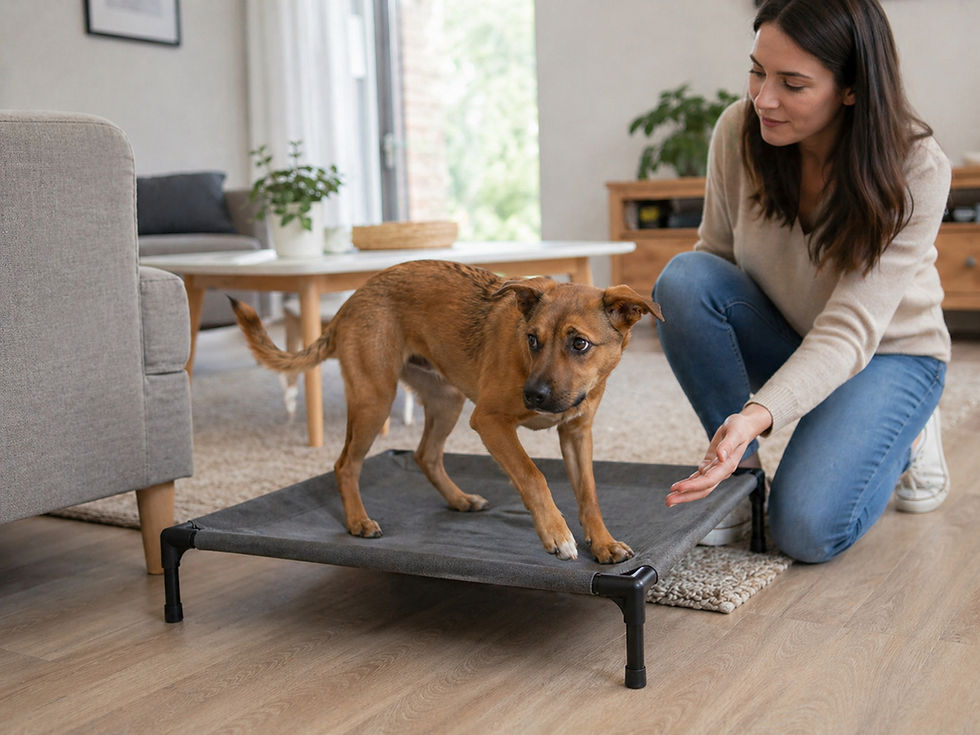
Many dogs need to be taught that calm time is not optional. A place bed, crate, pen, or quiet room can help create a clear boundary that tells the dog, “Nothing is happening right now. It is time to relax.”
Without that structure, some dogs will keep themselves awake all day.
Barking Can Get Worse When a Dog Is Tired
A tired dog may become more sensitive to normal household or neighborhood sounds.
The door closes? Bark.
A car passes? Bark.
Another dog walks by? Bark.
Someone moves in the kitchen? Bark.
When the nervous system is already overloaded, small triggers can feel much bigger to the dog. They may react faster and recover slower.
This is why some dogs seem to get worse in the evening. By the end of the day, they are tired, overstimulated, and less capable of handling normal distractions.
Instead of assuming the dog needs one more long walk, it may be time to look at whether they had enough quiet downtime earlier in the day.
Mouthing and Wild Play Can Be a Tired Dog Problem
Mouthing is often labeled as a training issue, and sometimes it is. But with many dogs, especially puppies and younger dogs, mouthing gets worse when they are tired.
The dog may start grabbing hands, biting the leash, jumping, barking, or getting rough during play.
This often happens after too much excitement or when the dog has been awake too long without a break.
At that point, continuing to correct or engage may only escalate things. The better answer may be to calmly end the activity and guide the dog into a structured rest period.
Rest Is Not the Same as Doing Nothing
Some owners worry that asking their dog to rest is unfair or boring.
But rest is not neglect. Rest is part of balance.
A well-structured dog should have time for:
Training
Exercise
Play
Potty breaks
Social interaction
Mental stimulation
Calm downtime
Deep sleep
The goal is not to make the dog lazy. The goal is to help the dog recover so they can think clearly, learn better, and behave more calmly.
A dog who gets proper rest is often easier to train because their brain is not constantly overloaded.
How to Help Your Dog Get Better Rest
Start by looking at your dog’s daily routine.
Ask yourself:
Does my dog have a quiet place to fully relax?
Is my dog constantly following me around the house?
Does my dog wake up every time something moves?
Is my dog getting overstimulated by windows, doors, kids, dogs, or backyard activity?
Does my dog become wild at certain times of day?
Do I give my dog structured downtime, or only exercise and freedom?
If your dog struggles to settle, adding structure can make a big difference.
Helpful tools may include:
A crate
A place bed
A quiet room
A leash inside the house for guidance
Covered windows or reduced visual triggers
Shorter, calmer training sessions
Scheduled rest after walks, play, or outings
The key is to teach the dog that rest is a normal part of the day, not something that only happens when they finally crash.

Calm Behavior Has to Be Practiced
Many dogs do not naturally know how to settle in a busy home. They have to learn it.
That means calmness should be trained just like sit, down, heel, or recall.
Place command, crate training, leash guidance, and clear household rules can all help a dog understand when it is time to engage and when it is time to relax.
Over time, the dog learns that they do not have to react to everything. They do not have to follow every person. They do not have to stay alert all day.
They can rest.
And once a dog learns how to rest, many “bad behaviors” start to decrease.
The Big Picture
If your dog is barking, mouthing, pacing, jumping, or acting impulsive, do not only ask, “How do I stop this behavior?”
Also ask, “Is my dog getting enough real rest?”
Poor sleep can make dogs more reactive, more emotional, more impulsive, and harder to train. A tired dog may look hyper, but what they often need is not more chaos — they need structure, calm guidance, and a better routine.
Helping your dog rest is not a small detail. It is a major part of creating a calmer, more balanced dog.
At San Diego Dog Training, we help dogs build better habits through structure, communication, calmness, and real-life training. Because sometimes the path to better behavior starts with teaching your dog how to finally turn off.


Comments