

How to Prepare Your Dog for Vet Visits Without Creating More Fear

Vet visits can be stressful for a lot of dogs. Between the car ride, the waiting room, strange smells, other animals, unfamiliar people, slippery floors, exam tables, and hands reaching toward them, it is easy for a dog to feel overwhelmed before the appointment even begins.
The problem is that many owners only think about vet visit behavior when the appointment is already happening. At that point, the dog may already be nervous, overexcited, defensive, or trying to escape. Then the owner has to rely on holding, pulling, bribing, or forcing the dog through the situation.
That usually creates more fear.
The goal is not to make your dog “love” the vet overnight. The goal is to help your dog build skills before they need them: handling, waiting, restraint, neutrality, and the ability to stay calm in new environments.
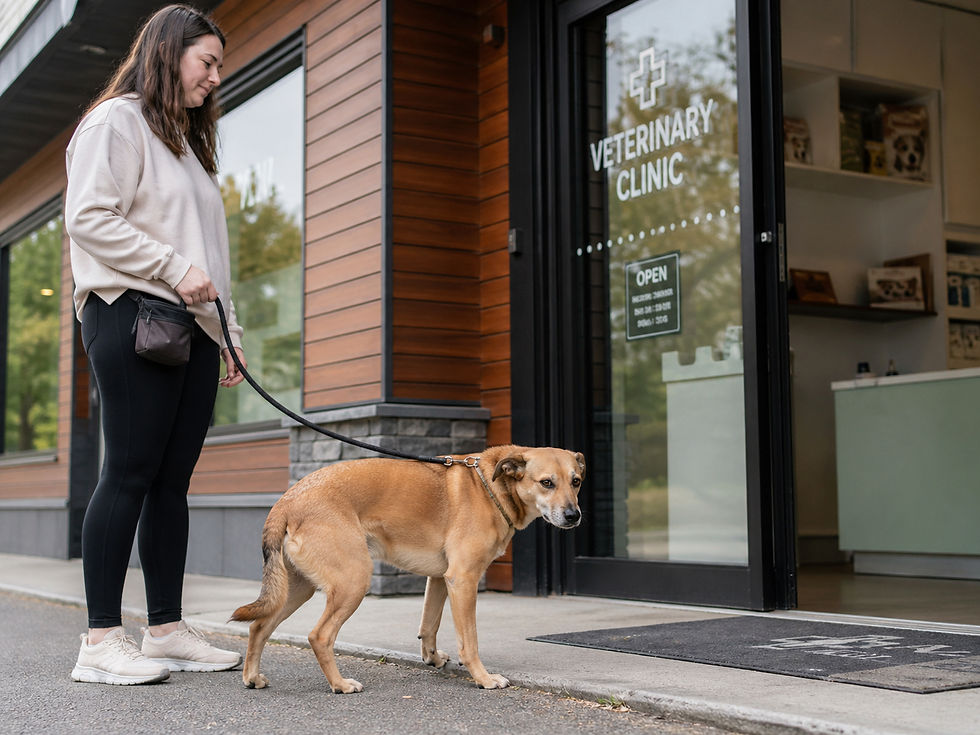
Why Vet Visits Become So Stressful for Dogs
For many dogs, vet visits are unpredictable.
They do not understand why they are being touched, lifted, examined, restrained, or taken into a room full of unfamiliar smells and sounds. Even friendly dogs can become uncomfortable when they lose control of their space.
A dog may struggle at the vet because they are:
Nervous around strangers
Sensitive about their paws, ears, mouth, or tail
Overexcited by other dogs in the lobby
Uncomfortable being restrained
Scared of slippery floors or exam tables
Not used to being handled calmly
Already overstimulated from the car ride or waiting room
This is why preparation matters. A dog who has practiced calm handling and structure at home is usually better equipped to handle pressure in public.
Start With Handling Practice at Home
One of the most helpful things you can do is teach your dog that gentle handling is normal.
A lot of dogs are only touched in certain areas when something unpleasant is about to happen. For example, their paws are grabbed only when nails are being trimmed. Their ears are touched only when they need cleaning. Their mouth is opened only when medication is involved.
That can make handling feel suspicious.
Instead, practice calm, everyday handling when nothing bad is happening. Keep sessions short and low-pressure.
You can gently practice touching your dog’s:
Paws
Ears
Collar
Tail
Mouth area
Chest
Belly
Legs
The goal is not to wrestle your dog into position. The goal is to teach them, “This is normal. You can stay calm. Nothing dramatic is happening.”
Start with just a few seconds at a time. Touch, pause, release, and reward calm behavior. If your dog pulls away, panics, mouths, growls, or freezes, that is information. Slow down and make the exercise easier.
Teach Your Dog to Be Neutral About Restraint
Vet staff often need to gently hold a dog still for exams, vaccines, bloodwork, temperature checks, or basic handling. If your dog has never practiced restraint before, that can feel scary.
At home, you can help your dog get used to light, calm restraint in a way that feels predictable.
For example, practice:
Holding the collar calmly
Placing one hand gently on the chest
Guiding your dog into a sit or stand
Briefly holding your dog close to your body
Having your dog remain still while you touch different areas
The important part is your energy. Do not turn it into a wrestling match. Stay calm, matter-of-fact, and structured.
You are teaching your dog that being still while handled is a normal skill, not a punishment.

Practice Waiting Calmly
A huge part of vet visit success happens before the exam even starts.
Many dogs fall apart in the waiting room because they are allowed to scan, pull, pace, bark, whine, rush toward other dogs, or hide behind their owner. By the time they enter the exam room, they are already mentally overloaded.
That is why waiting calmly is such an important skill.
Practice this outside of the vet before your appointment. Ask your dog to settle beside you in everyday situations like:
Outside a coffee shop
At a quiet park bench
In a pet-friendly store
In your car before getting out
Near a building entrance
In your living room while people move around
You are not just practicing obedience. You are teaching your dog how to do nothing.
That skill matters.
A dog who can calmly wait on leash, hold position, and ignore the environment has a much better chance of staying regulated at the vet.
Work on Neutrality Around Other Dogs
Vet offices often have other dogs nearby. Some are excited. Some are nervous. Some are barking. Some are injured or stressed.
Your dog does not need to greet them.
In fact, the vet lobby is usually not a good place for social interaction. Dogs are often already under stress, and greetings in tight spaces can create more tension.
Teach your dog that seeing another dog does not mean they get to pull, stare, bark, whine, or say hello. Practice calm neutrality during walks and public outings.
Reward your dog for:
Looking at another dog and disengaging
Staying beside you on leash
Holding a sit or down
Checking in with you
Ignoring movement around them
Neutrality is not the same as being unfriendly. It simply means your dog can exist around other dogs without becoming overly emotional.
That is incredibly useful at the vet.
Take “Happy Visits” When Possible
If your dog only goes to the vet when something uncomfortable happens, the building itself can become a warning sign.
When possible, ask your vet clinic if you can stop by for a quick, low-pressure visit. This might mean walking into the lobby, stepping on the scale, getting a treat from the staff, and leaving.
No exam. No shots. No pressure.
These short visits can help your dog learn that the vet office does not always predict something scary.
Keep these visits brief and calm. Do not overdo it. The goal is to leave while your dog is still doing well.
Practice Getting on and off Surfaces
Some dogs are nervous about exam tables, scales, ramps, or slippery floors. This can make vet visits harder because the dog is not only dealing with people touching them, but also with unstable or unfamiliar surfaces.
At home, you can practice body confidence by having your dog calmly step onto different safe surfaces, such as:
A low platform
A dog bed
A mat
A scale, if you have one
A grooming table, if appropriate
Different floor textures
Do not force your dog onto something scary. Build confidence gradually. The goal is to help your dog understand how to move their body calmly and confidently when asked.

Keep the Appointment Day Structured
On the day of the vet visit, your goal is to reduce chaos.
Before the appointment, give your dog a chance to potty and move around, but avoid turning it into a wild, overstimulating activity. You want your dog settled, not exhausted or frantic.
When you arrive, keep your dog on a short, controlled leash. Do not allow them to drag you through the parking lot or rush into the clinic. That excited entrance sets the tone for the rest of the visit.
If the waiting room is crowded or your dog is struggling, you can ask the clinic if you can wait outside or in the car until they are ready for you. This can be especially helpful for reactive, fearful, or easily overstimulated dogs.
Inside the exam room, stay calm and clear. Your dog will often take cues from your energy. If you are tense, apologetic, frantic, or constantly repeating nervous praise, your dog may become more worried.
Calm support is better than emotional panic.
Do Not Wait Until There Is a Problem
The best time to prepare your dog for vet visits is not when they are already sick, injured, or overdue for an appointment.
Start now.
Handling, waiting, leash control, neutrality, and calm restraint are life skills. They help at the vet, but they also help with grooming, travel, guests, public outings, and everyday home life.
The more your dog understands structure before stressful situations happen, the less pressure you have to use in the moment.
When Your Dog Needs More Help
Some dogs need more than basic practice at home. If your dog growls, bites, panics, shuts down, thrashes, or becomes extremely reactive at the vet, it may be time to get professional help.
That does not mean your dog is bad. It means they need a better plan.
A good training plan can help your dog learn how to tolerate handling, respond to guidance, settle in public, and move through stressful situations with more confidence.
Final Thoughts
Vet visits do not have to be a battle.
With the right preparation, your dog can learn how to be calmer, more cooperative, and less fearful during appointments. The key is to practice the skills before you need them.
Work on calm handling. Practice waiting. Build neutrality around other dogs. Teach your dog that restraint does not have to be scary. Help them feel more confident in unfamiliar environments.
A prepared dog is not just easier for the vet to examine. They are also safer, calmer, and more comfortable through the entire experience.
At San Diego Dog Training, we help dogs build real-life skills that carry over into everyday situations, including vet visits, grooming, public outings, and stressful environments. With structure, consistency, and the right training approach, your dog can learn to handle more of life calmly and confidently.


Comments