

Training Your Dog to Relax in Public Spaces

For many dog owners, one of the biggest goals is being able to bring their dog out in public and actually enjoy the experience. Whether that means sitting at a coffee shop patio, walking through a busy neighborhood, or spending time at a local park, a calm dog makes all the difference.
At San Diego Dog Training, we often work with dogs who do great at home but struggle to settle once they’re out in the real world. Public spaces can be full of distractions — people, dogs, noises, scents, food, movement, and unfamiliar environments. For some dogs, that can lead to pulling, barking, whining, restlessness, or overstimulation.
The good news is that calm behavior in public can be taught. Like any other skill, relaxation takes practice, consistency, and the right training approach.
Why It Matters
Teaching your dog to relax in public is about more than convenience. It helps your dog build confidence and learn how to exist comfortably in different environments without feeling the need to react to everything around them.
A dog that can settle in public is often safer, easier to handle, and more enjoyable to include in everyday life. It also creates more opportunities for you to take your dog along for walks, errands, outdoor dining, family outings, and social experiences.
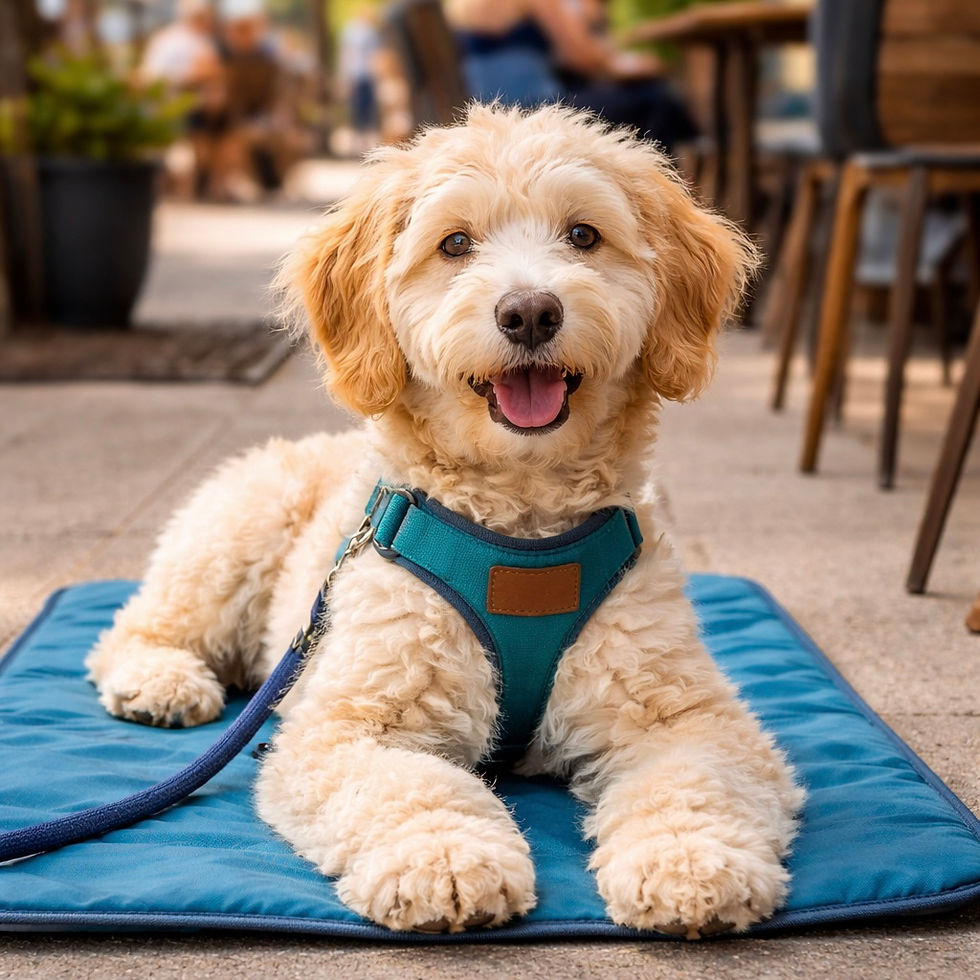
Public Calm Starts at Home
Before expecting your dog to relax in distracting environments, it’s important to build a strong foundation at home. Dogs need to understand calmness before they can practice it in more challenging settings.
Helpful foundation skills include:
Sit and down
Stay or duration-based behaviors
Loose leash walking
Attention to name or handler
A reliable settle or “place” behavior
One of the most overlooked skills in dog training is simply teaching a dog how to do nothing. Many dogs are used to always being stimulated, corrected, or directed. Learning to quietly settle is a skill all by itself.
Teach a Settle on a Mat or Place
One of the most effective ways to teach public relaxation is with a mat, cot, or designated “place.” This gives your dog a clear job: settle here and stay calm.
Start by teaching this at home in a quiet, low-distraction environment. Reward your dog for going to the mat, lying down, and remaining there calmly. Over time, increase the duration before rewarding. Once your dog understands that the mat means relax, you can begin bringing it into new environments.
This creates consistency for your dog. Even when the world around them changes, their job stays the same.
Start Small and Build Gradually
A common mistake dog owners make is asking for too much too soon. If your dog cannot relax in the front yard, they are probably not ready for a crowded patio in downtown San Diego.
Begin in lower-distraction environments and slowly build from there. For example, you might practice:
Inside your home
In the backyard or driveway
On a quiet sidewalk
At a calm park
Near moderate distractions
In more active public places
Gradual exposure helps your dog stay successful and prevents them from becoming overwhelmed.
Reward Calm Choices
When training in public, many owners focus only on obedience cues like sit or down. While those are helpful, true relaxation comes from rewarding your dog for choosing calm behavior on their own.
That might look like:
Lying down without being asked
Looking at a distraction and choosing not to react
Soft body language
Calm breathing
Quietly observing the environment
These moments matter. Reinforcing calm choices teaches your dog that relaxation is rewarding.
Learn to Read Your Dog
If your dog is overstimulated, anxious, or over threshold, they are not truly learning to relax. They are simply trying to cope.
Watch for signs that your dog may be struggling, such as:
Excessive panting
Whining or barking
Dilated pupils
Constant scanning
Inability to focus
Refusing food
Tight body language or pacing
When you see these signs, the best thing to do is reduce the difficulty. Move farther away from the distraction, shorten the session, or return to an easier environment. Progress happens faster when dogs are trained at a level where they can succeed.

Duration Matters
Relaxation is not just about getting your dog into a down position. It is about teaching them to remain calm for longer periods of time.
Start with short, successful sessions. Even one or two minutes of calm behavior can be a great place to begin. As your dog improves, gradually increase the amount of time they are expected to settle.
Remember that patience is part of the process. Calmness is built, not forced.
Consistency in Different Locations
Dogs do not automatically generalize behaviors well. A dog that can settle beautifully in the living room may act completely different in a park, pet store, or outdoor café.
That is why practice in multiple locations is so important. Once your dog understands the behavior, work on it in a variety of public settings. In San Diego, this could include neighborhood walks, local parks, outdoor shopping areas, and dog-friendly patios.
Each new location gives your dog a chance to strengthen the skill and learn that calm behavior applies everywhere, not just at home.
Avoid Common Mistakes
One of the fastest ways to stall progress is moving too quickly. Busy public settings can be too much too soon for many dogs, especially puppies, adolescent dogs, rescue dogs, or dogs with anxiety.
Other common mistakes include:
Expecting too much too early
Training for too long
Correcting nervous behavior instead of helping the dog feel successful
Ignoring small signs of stress
Only practicing when you need your dog to behave
The best results come from short, structured sessions where your dog can gradually build confidence.
Final Thoughts
Teaching your dog to relax in public spaces is one of the most valuable real-world skills you can work on. It makes outings more enjoyable, helps reduce stress for both you and your dog, and builds a stronger level of trust and communication.
At San Diego Dog Training, we help dog owners teach practical, everyday behaviors that make life with their dogs easier and more rewarding. If your dog struggles with overstimulation, leash reactivity, restlessness, or settling in public, the right training plan can make a huge difference.


Comments