

The Place Command: One Skill That Solves Dozens of Behavior Problems

When most people think about dog training, they picture the basics: sit, down, stay, come. Those are all useful skills, but there’s one command that often gets overlooked and ends up being one of the most powerful tools a dog owner can have:
Place.
If you’ve never taught a solid place command, you might be missing out on a skill that can help with everything from jumping on guests to begging at the dinner table to general household chaos. It’s one of those commands that seems simple on the surface, but in real life, it solves a surprising number of behavior problems.
What Is the Place Command?
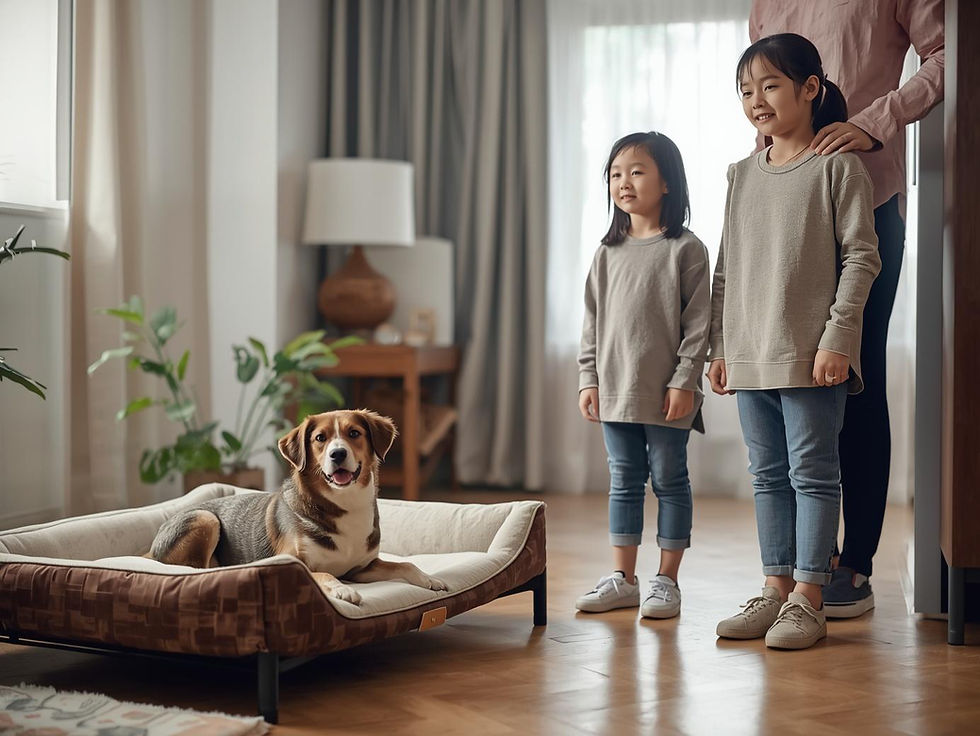
The place command means your dog goes to a designated spot — usually a dog bed, mat, cot, or platform — and stays there until released.
That’s it.
But the real magic is what this teaches your dog:
how to settle
how to wait
how to resist impulses
how to be calm even when exciting things are happening nearby
In other words, place is not just about “going to a bed.” It’s about teaching your dog how to turn off.
And for a lot of dogs, that’s a life-changing skill.

Why Place Is So Useful
A lot of unwanted behavior comes from the same root issue: the dog doesn’t know what to do instead.
They see guests come in, so they jump.
They smell food, so they hover.
They hear activity in the kitchen, so they get underfoot.
They feel overstimulated, so they pace, bark, or make bad choices.
The place command gives your dog a clear job. Instead of guessing, reacting, or spiraling into overexcitement, they have a simple answer:
Go to place. Stay there. Relax.
Dogs thrive when expectations are clear. Place gives them structure in situations that would otherwise feel exciting, chaotic, or confusing.
Behavior Problems the Place Command Can Help With
A reliable place command can help improve a long list of everyday issues, including:
Jumping on Guests
When visitors walk through the door, many dogs lose their minds. Place gives your dog an alternative to launching at people the second the door opens.
Counter Surfing and Kitchen Chaos
If your dog is always underfoot while you cook, sniffing for dropped food, or trying to investigate every ingredient, place creates boundaries without needing constant correction.
Begging During Meals
Rather than staring into your soul while you eat or parking themselves under the table, your dog can learn that mealtime means relaxing on their bed.
Door Dashing
Place helps create impulse control around doors, which can make arrivals and departures much safer and calmer.
Overexcitement in the House
For dogs that struggle to settle, place becomes a built-in off switch. It helps them practice calm instead of constantly moving, whining, pacing, or demanding attention.
Barking at Every Little Thing
While place is not a cure-all for barking, it can absolutely help dogs who escalate because they’re in a constant state of arousal. Calm body, calmer brain.
Multi-Dog Household Chaos
In homes with more than one dog, place can bring structure fast. It helps prevent crowding, competition, and general madness during exciting moments.
Why It Works So Well
The place command works because it addresses more than the surface behavior.
A lot of people get stuck trying to stop the problem itself:
stop jumping
stop barking
stop begging
stop following me
stop being wild
But dogs usually learn faster when we show them what to do, not just what not to do.
Place replaces chaos with clarity.
It teaches:
boundaries
duration
calmness
impulse control
follow-through
That combination is incredibly powerful. Once your dog understands how to stay in one spot and relax there, you can start applying that skill to all kinds of real-life situations.
Place Is About More Than “Stay”
This is where a lot of people get confused.
They think place is basically just a stay on a dog bed. But a good place command is more than that.
It teaches your dog to remain settled in a location even when life is happening around them. That might mean:
someone knocking at the door
kids running through the house
food being served
another dog moving nearby
you walking in and out of the room
That makes place more practical than a lot of obedience commands because it directly fits into daily life.
Teaching Place the Right Way
A strong place command doesn’t happen by yelling “place” from across the room and hoping your dog magically understands. Like any useful skill, it should be taught in steps.
Start simple:
use a clearly defined dog bed, cot, or mat
guide your dog onto it
reward calm behavior on the spot
build duration gradually
add a clear release word so your dog knows when they’re done
From there, you slowly increase the challenge:
you move around
you add distractions
you practice with doors, food, guests, and everyday activity
The goal is not just getting your dog onto the bed. The goal is helping them understand that staying there calmly is part of the job.
Common Mistakes People Make
Going Too Fast
Owners often expect too much too soon. If your dog can barely stay on place for five seconds in a quiet room, they’re not ready for guests at the front door.
Repeating the Command Over and Over
If you say “place, place, place, place” ten times, your dog learns that the first nine don’t matter. Give the cue once, then help them follow through.
Ending the Exercise Too Late
Especially with younger or higher-energy dogs, it’s better to end on success than to push until they fail.
Only Practicing When You Need It
If place only shows up when guests arrive or when your dog is already overstimulated, progress will be slower. Practice it when life is calm too.
Rewarding the Position but Not the Mindset
A dog can technically be on place while still whining, creeping, scanning the room, or vibrating with anticipation. Calmness matters, not just location.
Why Every Dog Should Learn It
Place isn’t just for “bad” dogs or dogs with major behavior issues. It’s useful for:
puppies learning household routines
adolescent dogs with too much energy
adult dogs who need more structure
anxious dogs who benefit from predictable boundaries
pushy dogs who need help with impulse control
busy families who want more calm in the home
Even a well-behaved dog benefits from knowing how to settle.
In fact, one of the best things you can teach a dog is that they do not need to be involved in everything.
Real Life Matters More Than Fancy Tricks
A lot of dog owners are impressed by flashy obedience, but real success usually looks a lot simpler.
A dog who can calmly go to place while you answer the door, cook dinner, eat a meal, or work from home is demonstrating a level of training that makes everyday life dramatically easier.
That’s the beauty of the place command. It’s not flashy, but it’s incredibly functional.
And functional training is what creates peace in the home.
Final Thoughts
If you’re dealing with jumping, begging, pacing, barking, boundary issues, or general household chaos, don’t underestimate the power of teaching place.
It may look like a basic skill, but it builds some of the most important qualities a dog can learn: calmness, patience, and self-control.
That’s why the place command can solve dozens of behavior problems.
Not because it’s magic — but because it teaches dogs how to make better choices in the moments that matter most.


Comments