

Raising a Calm Dog in a Busy Household

If your home feels a little chaotic, you are not alone.
Kids running through the house, people coming and going, phones ringing, TVs on, packages arriving, guests visiting, meals being made — for humans, it is just daily life. For dogs, though, that kind of environment can be a lot to process.
Many owners assume their dog will simply “get used to it,” but calmness does not usually happen by accident. It is a skill. And just like leash manners, place, or recall, it needs to be taught, practiced, and reinforced.
The good news is that you do not need a perfectly quiet house to raise a calm dog. In fact, dogs can absolutely learn to settle and make good decisions in busy homes. They just need the right guidance.
Why Some Dogs Struggle in Busy Homes
Dogs are always taking in information from their environment. In a busy household, there is a constant stream of stimulation:
movement
noise
excitement
unpredictability
people entering and leaving rooms
sudden changes in energy
For some dogs, especially puppies, young dogs, high-drive breeds, or naturally sensitive dogs, all of that stimulation can keep them in a constant state of alertness.
That can show up as:
following people everywhere
barking at every little sound
jumping on guests
difficulty settling down
stealing items for attention
getting overexcited during normal household activity
acting “wild” in the evenings
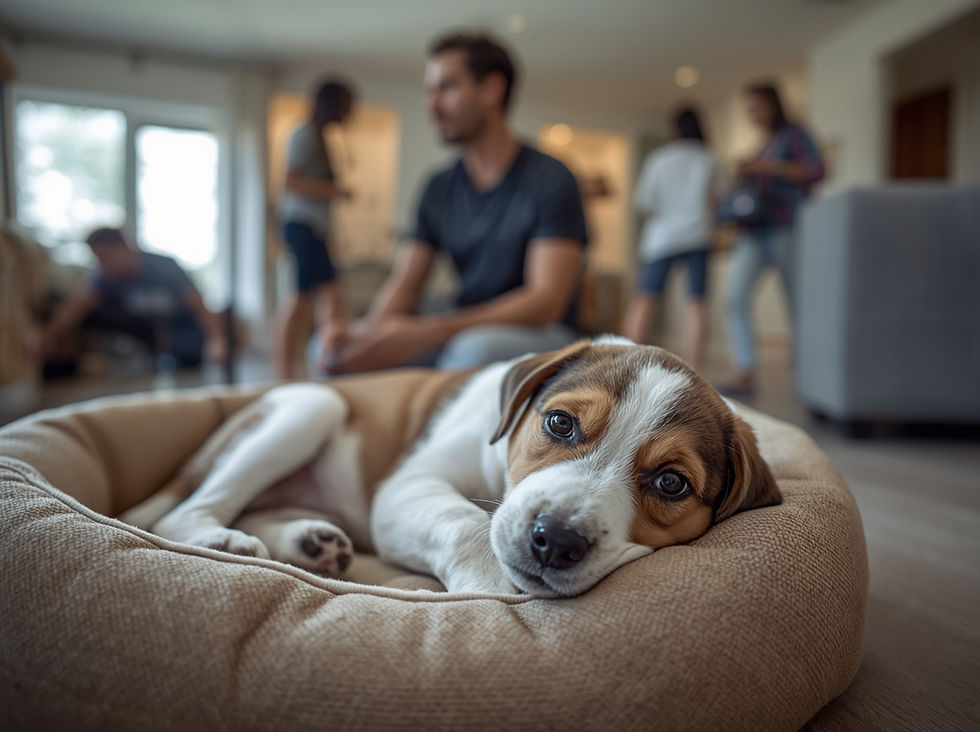
This does not always mean a dog is bad, stubborn, or overly energetic. Often, it means they have never been shown how to relax in the middle of real life.
Calmness Is Not Just “Being Tired”
A lot of people try to solve household chaos by wearing their dog out physically. Exercise matters, of course, but a tired dog is not always a calm dog.
Some dogs can go on a long walk, play fetch, and still come home overstimulated and unable to settle. That is because physical exercise and emotional regulation are not the same thing.
A truly calm dog is not just exhausted. A calm dog knows how to:
pause
settle
handle stimulation without overreacting
stay neutral when life is happening around them
That kind of calm comes from training, structure, and repetition.
What Calmness Actually Looks Like
When people picture a “well-behaved dog,” they often imagine perfect obedience. But in a busy household, calmness usually looks much simpler than that.
It looks like a dog who can:
lie down while the family eats dinner
stay relaxed while kids move around
watch guests come in without exploding with excitement
settle on a bed while the house is active
handle noise and movement without needing to be involved in everything
take direction instead of spiraling into chaos
That is the goal. Not a shut-down dog. Not a robot. Just a dog that can exist peacefully in the home without feeding off every bit of energy around them.
The Biggest Mistake Owners Make
One of the biggest mistakes people make is accidentally rewarding constant excitement.
This happens all the time without anyone realizing it. The dog gets attention when they bark, jump, follow, nudge, whine, or act silly. Meanwhile, quiet behavior gets ignored.
Over time, dogs learn:
Being busy gets noticed. Being calm gets overlooked.
If you want a calm dog, calm behavior has to start “paying off.”
That does not always mean food rewards. Sometimes it means access to space, praise, rest, consistency, and clear boundaries. But the message should be the same:
Calm is valuable. Calm works.
Start by Lowering the Chaos
You do not have to eliminate activity in your home, but you do want to set your dog up to succeed.
If your dog is already struggling, throwing them into the middle of every loud, busy moment usually will not teach calmness. It usually just rehearses more chaos.
Instead, think about how to make calm easier.
That might mean:
using a leash indoors for more guidance
giving your dog a designated place to settle
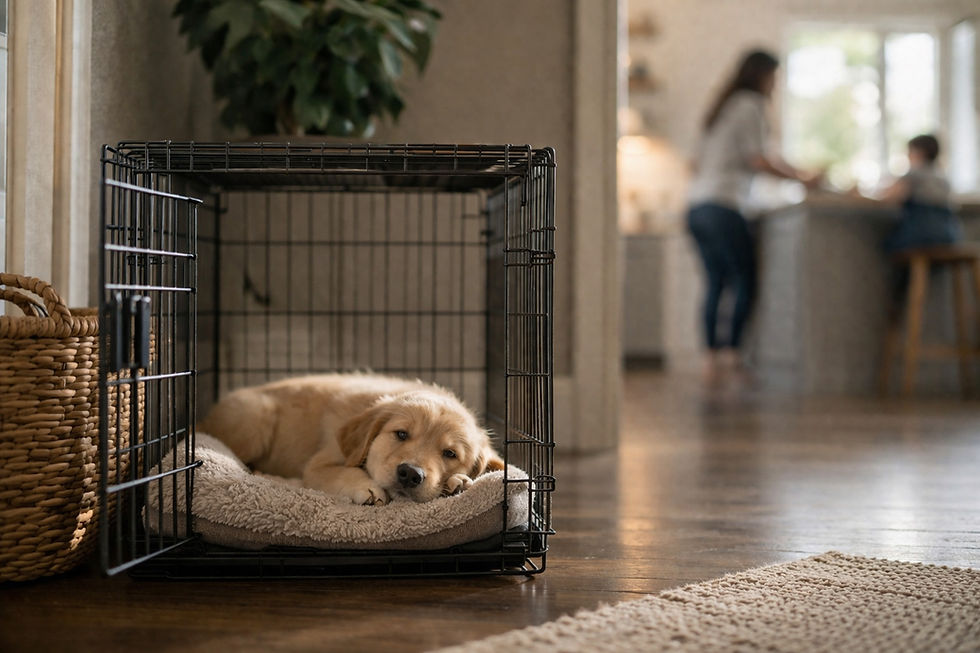
using crates, pens, or baby gates appropriately
limiting free roaming when the house is hectic
creating routine around meals, guests, and downtime
preventing constant rehearsal of jumping, barking, and pacing
Management is not cheating. It is part of training. A dog who keeps practicing frantic behavior gets better at being frantic.
Teach an “Off Switch”
A lot of dogs know how to go, go, go. Fewer dogs know how to stop.
That is why teaching an “off switch” is so important, especially in a busy household.
Some of the best ways to build this are:
Place training
Teaching your dog to go to a bed or cot and stay there calmly is one of the most useful life skills you can build. It gives your dog a clear job and helps them learn that they do not need to participate in every moment.
Structured downtime
Not every moment of the day should be entertainment. Dogs need regular opportunities to do nothing. That might mean resting in a crate, relaxing on place, or quietly settling near you without constant interaction.
Calm leash guidance indoors
For dogs who pace, follow, and insert themselves into everything, indoor leash work can help create clarity and reduce impulsive choices.
Rewarding relaxation
Notice when your dog makes a good choice on their own. Lying down. Taking a breath. Settling quietly. Those moments matter. Reinforcing them helps your dog realize that calm behavior is worth repeating.
Routine Helps Dogs Feel Secure
Busy households can still have structure.
Dogs do best when life feels predictable. They do not need every second of the day planned out, but they do benefit from consistent patterns.
For example:
walks happen at roughly the same time each day
meals are predictable
guests are handled with a clear routine
rest periods are built into the day
training happens regularly, even in short sessions
Routine reduces anxiety because your dog does not have to guess what is coming next. That predictability helps them settle faster and stay more emotionally balanced.
Everyone in the House Has to Be on the Same Page
This is a huge one.
A dog cannot learn calmness if one person is reinforcing boundaries and another is encouraging chaos. If one person asks for place before greetings and another lets the dog launch onto guests, progress gets confusing fast.
You do not need perfection, but you do need consistency.
Try to make sure everyone in the household agrees on:
how the dog greets people
where the dog settles during busy times
what behaviors are not allowed
how attention is given
when play starts and stops
Dogs learn patterns. The clearer the pattern, the faster the learning.
Puppies Need This Even More
If you are raising a puppy in a busy home, this work matters even more.
A lot of people focus heavily on socialization, exposure, and play, which are all important. But one of the most overlooked skills for puppies is learning how to be calm around everyday life.
A puppy should not only learn how to explore the world. They should also learn how to pause in it.
That means helping them practice:
watching without reacting
settling around movement
resting even when fun things are happening
not demanding constant engagement
being okay with boredom
These skills create a much easier adolescent dog later on.
Calm Dogs Are Built in Small Moments
Most people think dog training happens in official sessions. But calmness is usually built in tiny everyday moments.
It is built when your dog waits at a doorway.
When they lie down instead of pacing.
When they stay on place while dinner is made.
When they choose rest over chaos.
When they learn that not every sound, movement, or visitor is their business.
Those moments may seem small, but together they shape the kind of dog you live with every day.
Final Thoughts
You do not need a silent home to raise a calm dog.
You just need intention, structure, and follow-through.
A busy household does not have to create a chaotic dog. With the right training, your dog can learn to settle, handle stimulation better, and live more peacefully in the middle of everyday life.
Calmness is not something a dog magically grows into. It is something we teach.
And when you do, life gets easier for everyone in the house.


Comments