

Door Dashing: Teaching Your Dog Patience at Thresholds

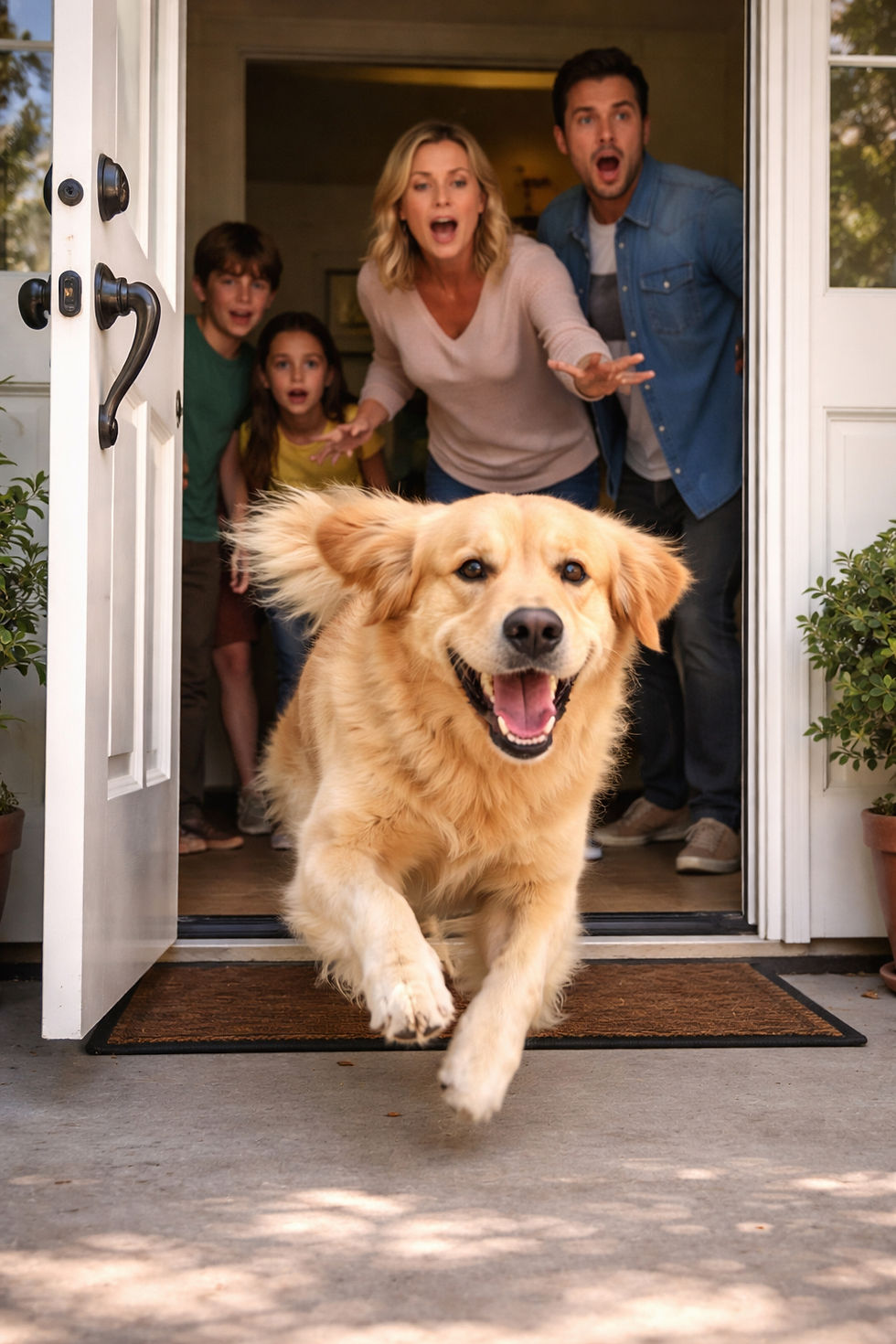
One of the most common everyday struggles dog owners deal with is door dashing — that moment when your dog charges through the front door, bolts out of the crate, rushes through the car door, or pushes past you at gates and entryways. While it may seem like a simple bad habit, door dashing can become a serious safety issue very quickly.
A dog that lacks patience at thresholds can run into the street, knock people over, escape the house, or create chaos anytime a door opens. The good news is that this behavior is highly trainable. Teaching your dog to pause, wait, and look to you for permission builds far more than manners — it builds impulse control, safety, and respect for guidance.
What Is a Threshold?
A threshold is any boundary your dog crosses from one space into another. This includes:
Front doors
Back doors
Gates
Crate doors
Car doors
Stairways
Room entrances
For dogs, thresholds often trigger excitement because they predict something rewarding. The front door might mean a walk. The back door might mean freedom in the yard. The car door might mean adventure. Without training, many dogs learn to explode through these spaces the second the opportunity appears.
Why Dogs Door Dash
Door dashing is usually not about defiance. It is more often caused by a combination of:
Excitement
Your dog associates open doors with something fun, so they rush forward without thinking.
Lack of impulse control
Many dogs have never been taught that waiting calmly is part of the process.
Rehearsed behavior
If a dog has practiced rushing through doors over and over, the behavior becomes automatic.
Anxiety or over-arousal
Some dogs move quickly through thresholds because they are already in a heightened emotional state.
Inconsistent boundaries
If sometimes the dog is allowed to rush out and other times corrected, the rules remain unclear.
Why Threshold Manners Matter
Teaching patience at thresholds is about much more than being polite. It can prevent real-life problems such as:
Running into traffic
Escaping the home or yard
Rushing visitors at the door
Dragging the owner outside on walks
Exploding out of the crate in an overexcited state
Creating unsafe situations around children or delivery people
A dog that learns to pause at boundaries starts to develop a more thoughtful way of moving through the world. Instead of reacting impulsively, they begin to wait for direction.
The Bigger Picture: Patience Before Freedom
One of the most valuable lessons a dog can learn is this: calm behavior unlocks access.
Instead of letting excitement open the door to freedom, we want the dog to understand that patience is what gets them what they want. The walk still happens. The yard is still available. The car ride still begins. But the path to those rewards becomes controlled and calm.
This mindset shift is powerful because it carries over into many other areas of training. Dogs that learn to wait at thresholds often improve with:
Leash walking
Greeting people politely
Place command
Crate manners
Mealtime patience
Overall household structure
Signs Your Dog Needs Threshold Work
Your dog may need more structure at thresholds if they:
Rush the front door when it opens
Bolt out of the car before being released
Push through gates ahead of you
Burst out of the crate the second the door opens
Spin, bark, or jump when preparing for a walk
Ignore your body position and move through you
These behaviors may seem small at first, but they often reflect a bigger issue with impulse control and overexcitement.
How to Start Teaching Threshold Patience
The goal is simple: your dog learns that an open door does not mean immediate permission to move forward.
Start with a low-distraction threshold, such as a bedroom door, crate door, or quiet back door. Keep the lesson calm and clear.
Step 1: Approach calmly
Bring your dog to the threshold in a neutral state. If they are already wildly excited, slow everything down before beginning.
Step 2: Ask for stillness
This may look like a sit, a down, or simply standing calmly without pushing forward. The exact position matters less than the mindset.
Step 3: Begin opening the door
Slowly crack the door open. If your dog starts to surge forward, close it again. The consequence is simple: rushing makes the opportunity go away.
Step 4: Reward patience
When your dog remains calm and holds position, continue opening the door. This teaches them that self-control is what keeps the opportunity available.
Step 5: Release intentionally
Once the dog is calm and waiting, give a clear release word such as “okay” or “free.” This tells them that movement happens with permission, not assumption.
Important Training Principle: Do Not Rush the Process
A common mistake is moving too fast. Owners often open the door too wide, add too much excitement, or expect reliability before the dog fully understands the lesson.
Patience at thresholds is built through repetition. At first, your dog may only be able to handle the door opening an inch. That is fine. The goal is not speed — it is clarity.
Small successful repetitions create lasting understanding.
Common Mistakes Owners Make
Repeating commands over and over
If you keep saying “wait, wait, wait,” the word can lose meaning. Instead, make the picture clear through your timing and follow-through.
Accidentally rewarding rushing
If the dog pulls forward and still gets to go outside, the rushing behavior is being reinforced.
Only practicing when in a hurry
Threshold work needs to be taught during calm training moments, not just during the chaos of leaving the house.
Inconsistency between family members
If one person requires patience and another allows the dog to blast through doors, progress will be slower.
Focusing only on obedience, not state of mind
A dog can sit and still be mentally chaotic. We want calm, not just position.
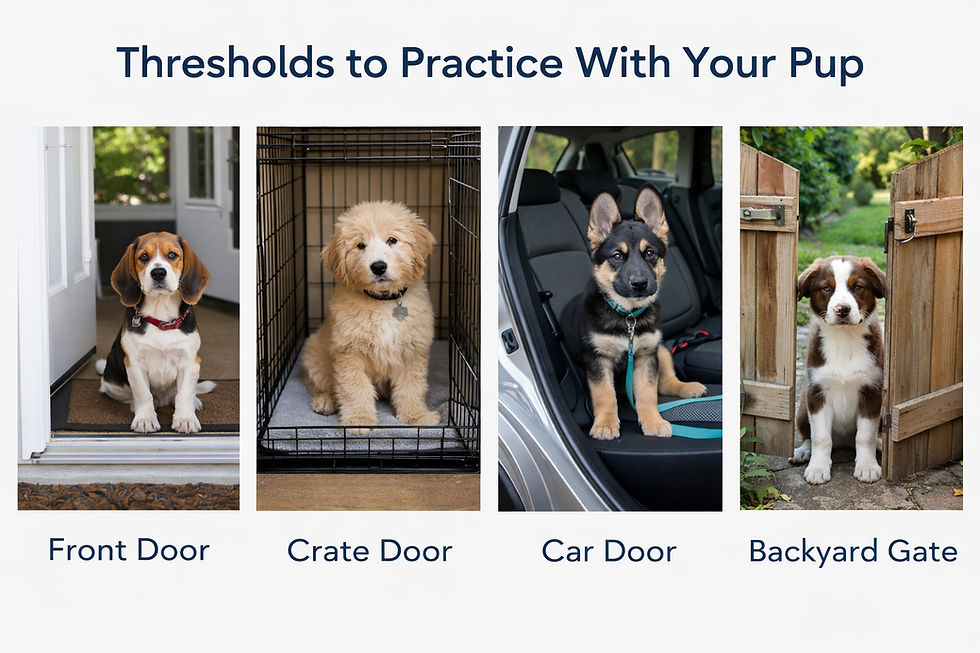
Front Door, Crate Door, Car Door — It All Counts
Threshold training should be practiced in all areas of life, not just at the front door.
Front door
Useful for preventing escapes, charging guests, and overexcitement before walks.
Crate door
Teaches your dog not to explode out of confinement in an aroused state.
Car door
Improves safety and prevents dangerous jumping from the vehicle before you are ready.
Backyard gate
Helps prevent bolting and teaches your dog to stay mentally connected to you outdoors.
The more places you apply this rule, the more naturally your dog begins to understand patience as a way of life.
What If Your Dog Is Extremely Excited?
Some dogs are so over-aroused by doors that they struggle to think clearly. In those cases, slow the exercise down even further. You may need to work on:
calmer leash handling
reduced pre-walk excitement
better engagement with the owner
place command or stationary exercises
overall daily structure
If your dog is barking, whining, spinning, or lunging at the threshold, the issue is often bigger than just the door itself. The dog may need help learning how to regulate excitement before they can succeed in more advanced threshold work.
The Goal Is Respectful Permission, Not Fear
Threshold training should not make a dog fearful of doors or hesitant to move. The goal is not to shut the dog down. The goal is to teach them that boundaries matter and guidance comes first.
A confident, well-trained dog can move through a doorway happily — but only when invited to do so.
That kind of patience reflects a dog that is learning how to live with structure, clarity, and self-control.
Final Thoughts
Door dashing may seem like a small issue, but it often points to a larger training gap in impulse control and household manners. Teaching your dog patience at thresholds is one of the simplest ways to create more safety, calmness, and respect in everyday life.
Every doorway is a training opportunity. Every gate, crate, and car door is a chance to reinforce patience before freedom.
When dogs learn that calm behavior opens doors, they start making better choices everywhere else too.


Comments