

The Power of Blue and Yellow: Enhancing Dog Training with Color Visibility and Focus
- Daniel Runewicz
- 7 days ago
- 4 min read

Training a dog effectively depends on many factors, from consistency to positive reinforcement. One often overlooked aspect is the role of color in training tools and toys. Dogs see the world differently than humans, and certain colors stand out more to them. Blue and yellow are the most visible colors for dogs, making them powerful tools to improve engagement, focus, and motivation during training sessions.
This post explores why blue and yellow catch a dog’s eye, how these colors can enhance training, and practical tips for choosing the right toys and tools. Understanding the psychological effects of these colors can help dog owners create a more effective and enjoyable training experience.
Why Blue and Yellow Are the Most Visible Colors for Dogs
Dogs have a different color vision system than humans. While humans have three types of color receptors (cones), dogs have only two. This means dogs see fewer colors and perceive the world mostly in shades of blue and yellow, with reds and greens appearing as muted or grayish tones.
Blue appears as a bright, distinct color to dogs.
Yellow also stands out clearly against many backgrounds.
Colors like red and green blend into the environment and are harder for dogs to distinguish.
This difference means that toys, treats, or training tools in blue or yellow are easier for dogs to spot, especially in outdoor settings or cluttered environments.
How Blue and Yellow Enhance Visibility and Engagement in Training
Visibility is crucial during training. When a dog can easily see a toy or target, it reduces confusion and increases focus. Here’s how blue and yellow help:
Quick recognition: Dogs can spot blue and yellow objects faster, which helps maintain their attention.
Reduced distractions: When training outdoors, blue and yellow toys stand out against grass, dirt, or pavement.
Clear signals: Using blue or yellow markers or targets can help dogs understand commands or cues more easily.
For example, a blue ball thrown in a grassy park is easier for a dog to track than a red ball. This immediate visual feedback encourages the dog to stay engaged and respond promptly.
Psychological Effects of Blue and Yellow on Dogs
Colors can influence mood and behavior, even in dogs. While research on canine color psychology is limited, observations and studies suggest:
Blue has a calming effect. It can help reduce anxiety and hyperactivity, making it useful during training sessions that require focus and patience.
Yellow is associated with energy and alertness. It can stimulate a dog’s interest and motivation, especially during active play or learning new commands.
Using these colors strategically can balance a dog’s emotional state. For example, a blue mat for a “stay” command can promote calmness, while a yellow toy can boost excitement during fetch or reward-based training.
Practical Tips for Selecting Blue and Yellow Toys and Training Tools
Choosing the right items in blue and yellow can make training more effective. Here are some tips:
Toys: Look for durable toys in bright blue or yellow. Rubber balls, frisbees, and tug ropes in these colors are easy for dogs to see and carry.
Training aids: Use blue or yellow clickers, target sticks, or treat pouches to create consistent visual cues.
Leashes and collars: Bright blue or yellow collars and leashes improve visibility during walks and outdoor training.
Environment: Place blue or yellow markers or cones during agility or obedience training to help dogs identify boundaries or goals.
When shopping, test the color in natural light to ensure it stands out. Avoid faded or dull shades that may blend into the surroundings.
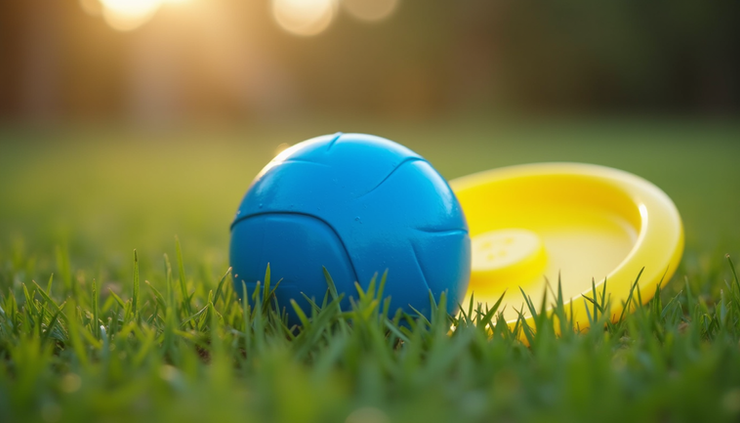
Examples of Using Blue and Yellow in Training Sessions
Here are some real-world examples of how blue and yellow improve training:
Recall training: Throw a yellow ball during recall exercises. The dog spots the ball easily and associates the color with a fun reward.
Focus drills: Use a blue mat or target for “place” commands. The calming color helps the dog settle and maintain position.
Agility courses: Mark obstacles with yellow cones. The dog can quickly identify the path and respond faster.
Interactive play: Rotate blue and yellow toys to keep the dog interested and prevent boredom.
These examples show how color can be a simple but powerful tool to enhance communication and motivation.
How to Incorporate Color Awareness into Your Training Routine
To make the most of blue and yellow in training:
Observe your dog’s response: Notice if your dog reacts more quickly or stays focused longer with blue or yellow items.
Be consistent: Use the same colors for specific commands or rewards to build clear associations.
Combine with positive reinforcement: Pair blue and yellow tools with treats, praise, or play to strengthen learning.
Adjust for environment: Use yellow toys in green outdoor spaces and blue toys indoors or on neutral backgrounds.
Rotate colors: Keep training fresh by alternating blue and yellow items to maintain interest.
By paying attention to color, you can tailor training to your dog’s natural vision and behavior.
Final Thoughts on Using Blue and Yellow to Improve Dog Training
Blue and yellow are more than just pretty colors for dogs. They are essential visual cues that improve visibility, focus, and motivation during training. Choosing toys and tools in these colors helps dogs recognize commands faster and stay engaged longer. Want to learn more about this subject? Feel free to reach out via call or text anytime to San Diego Dog Training (619) 534-4014! We got this Sit!


Comments