

The Hidden Cost of Letting Puppies Practice Bad Habits

Puppies are cute. That is both the best part and the problem.
When a tiny puppy jumps on your legs, steals a sock, barks for attention, pulls toward people, or climbs all over guests, it can feel harmless. Sometimes it even feels funny. They are small, wiggly, excited, and still learning about the world. It is easy to think, “They’ll grow out of it.”
But many behavior problems do not disappear simply because a puppy gets older. In fact, the more a puppy practices a behavior, the stronger that behavior can become.
That is the hidden cost of letting puppies practice bad habits: what feels cute now can become frustrating, stressful, or even dangerous later.

Puppies Are Always Learning
Puppies are not only learning during formal training sessions. They are learning all day long.
They learn when they rush out the door and get outside faster.
They learn when barking gets attention.
They learn when pulling on leash gets them closer to another dog.
They learn when jumping makes people pet them.
They learn when stealing something turns into a fun chase game.
Every repeated behavior creates a pattern. The puppy’s brain starts to connect action with outcome.
When a puppy does something and it works, they are more likely to do it again.
This is why early habits matter so much. Puppies are constantly rehearsing behaviors, whether we intend to teach them or not.
What Is Rehearsal in Dog Training?
Rehearsal means repeated practice.
In dog training, rehearsal is not always a good thing. If a puppy repeatedly practices calm behavior, patience, leash manners, and respectful boundaries, those skills become easier over time. But if a puppy repeatedly practices barking, jumping, pulling, nipping, or ignoring direction, those behaviors can also become stronger.
The problem is that many unwanted behaviors are self-rewarding.
A puppy who jumps on guests may get attention.
A puppy who barks at the window gets the rush of reacting.
A puppy who pulls on leash gets closer to exciting smells, people, or dogs.
A puppy who bites hands during play keeps the game going.
A puppy who rushes through doors gets access to something exciting.
Even if the owner does not mean to reward the behavior, the puppy may still find the behavior rewarding.
That is how bad habits get built.
“Cute Now” Can Become “Why Won’t They Stop?” Later
A lot of puppy behavior gets overlooked because it seems manageable in the beginning.
A 12-pound puppy jumping on your legs is cute. A 75-pound adult dog doing the same thing can knock someone over.
A puppy pulling toward another dog may seem friendly. An adult dog dragging you across the sidewalk is stressful and unsafe.
A puppy barking for attention may seem silly. An adult dog demanding attention all day can become exhausting.
A puppy stealing shoes may make everyone laugh. An adult dog guarding stolen items or destroying belongings becomes a much bigger issue.
A puppy rushing through the front door may seem eager. An adult dog bolting into the street is a serious safety concern.
The behavior did not suddenly appear when the dog grew up. In most cases, the dog practiced it over and over until it became part of their normal routine.
That is why puppy training is not just about teaching commands. It is about shaping daily habits before the wrong patterns become deeply ingrained.

Common Puppy Habits That Become Bigger Problems
Many owners wait to address behaviors because they assume their puppy is just being a puppy. While some puppy behavior is normal, that does not mean it should be practiced without structure.
Some common habits to interrupt early include:
Jumping on People
Jumping is often rewarded by attention, eye contact, touching, laughing, or talking. Even pushing the puppy away can feel like interaction.
Instead, puppies should learn that calm behavior gets access to people. This may mean using leash guidance, creating space, asking for stillness, or waiting until the puppy is calm before greeting.
Pulling on Leash
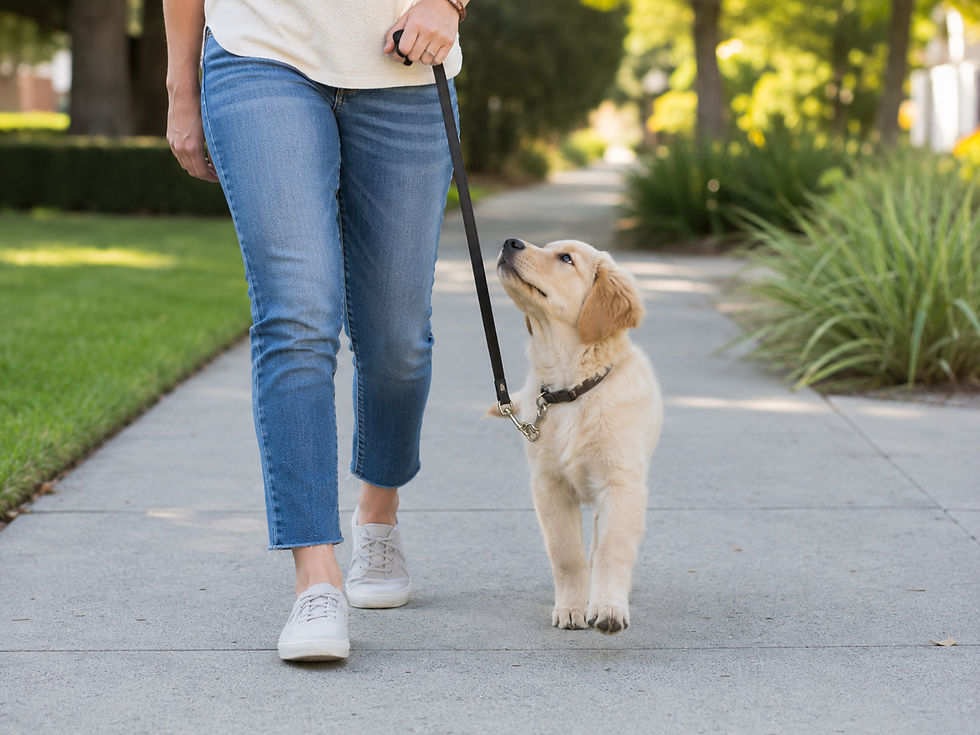
Leash pulling often starts early. Puppies pull because the world is exciting, and pulling usually gets them closer to what they want.
If a puppy learns that tension on the leash moves them forward, they will keep using it. Loose leash walking needs to be built before pulling becomes the default.
Barking for Attention
Some puppies bark when they want food, play, attention, or access to something. If barking causes the owner to respond every time, the puppy learns that barking works.
This does not mean ignoring every need. It means teaching the puppy calmer ways to communicate and not letting demanding behavior control the household.
Nipping During Play
Puppy biting is common, but it still needs direction. If biting hands, clothing, or ankles keeps the game going, the puppy may continue using their mouth to control people.
Play should have structure, boundaries, and breaks before the puppy becomes overly excited.
Door Rushing
Many puppies get excited at doors, gates, crates, cars, or thresholds. If they push through and gain access, they learn that rushing works.
Teaching a puppy to pause before moving through thresholds builds impulse control and safety.
Stealing Items
When a puppy grabs a sock and the whole family chases them, the puppy may think they just invented the best game ever.
Instead of turning stolen items into a chase, owners should manage the environment, limit access, and teach the puppy how to release items calmly.
Structure Is Not Harsh — It Is Helpful
Some owners worry that correcting puppy habits or setting boundaries will take away their puppy’s joy. But structure does not mean being harsh. It means being clear.
Puppies feel more secure when they understand what is expected of them.
A structured puppy is not a sad puppy. A structured puppy is learning how to live peacefully in a human world.
That includes learning when to play, when to rest, how to greet people, how to walk on leash, how to handle frustration, and how to calm down after excitement.
Without structure, puppies often become more anxious, impulsive, and demanding because they are constantly guessing what works.
The Goal Is Not Perfection
Puppies are going to make mistakes. They are going to get excited, distracted, silly, and overstimulated. That is normal.
The goal is not to expect adult-level behavior from a young puppy.
The goal is to prevent constant rehearsal of behaviors you do not want later.
That means catching patterns early. It means stepping in before the puppy practices the same unwanted behavior every day. It means guiding the puppy toward better choices instead of waiting until the habit becomes harder to change.
For example, instead of allowing a puppy to bark at the window every afternoon, move them away from the window and give them a calmer job.
Instead of letting a puppy drag you to every person on a walk, teach them that calm walking keeps the walk moving.
Instead of letting a puppy jump all over guests, use a leash, place bed, or structured greeting routine.
Small choices made consistently can prevent much bigger issues later.
Prevention Is Easier Than Fixing a Pattern
It is much easier to prevent a bad habit than to undo one that has been practiced for months or years.
Once a dog has rehearsed a behavior repeatedly, that behavior becomes familiar. It becomes automatic. The dog no longer has to think about it.
That is why older dogs with long-standing habits often need more time, consistency, and structure to change. It is not that they are stubborn. It is that the pattern has been built.
Puppyhood gives owners a valuable opportunity to shape the dog’s default behaviors early.
Calm greetings.
Loose leash walking.
Respectful boundaries.
Patience at doors.
Settling in the house.
Neutrality around distractions.
Listening even when excited.
These are not just obedience skills. They are lifestyle skills.
What Puppy Owners Should Focus On Early
Instead of only focusing on commands like “sit” or “down,” puppy owners should pay attention to the habits their puppy is practicing every day.
Ask yourself:
Is my puppy learning to wait or rush?
Are they learning to walk with me or pull me?
Are they learning to settle or demand attention?
Are they learning to greet calmly or jump?
Are they learning to listen around distractions or ignore me?
Are they learning that barking works?
Are they practicing calm confidence or constant excitement?
These daily patterns shape the adult dog your puppy is becoming.
Final Thoughts
The hidden cost of letting puppies practice bad habits is that those habits rarely stay small.
What starts as cute, funny, or harmless can turn into behavior that affects walks, guests, home life, safety, and your overall relationship with your dog.
The good news is that puppies are incredibly capable of learning when they are given clear guidance early. With structure, consistency, and the right expectations, you can help your puppy build patterns that make life easier as they grow.
At San Diego Dog Training, we help puppies and dogs learn real-life skills that go beyond basic commands. From leash manners and social skills to impulse control and in-home behavior, early training helps prevent small habits from becoming long-term problems.
Because the habits your puppy practices today become the dog you live with tomorrow.


Comments