

How to Help Your Dog Settle While You Work From Home

Working from home can sound like the perfect setup for dog owners. You get to be near your dog, avoid long stretches away from the house, and enjoy more time together throughout the day. But for many owners, working from home also creates a new set of behavior problems.
Your dog may follow you from room to room, whine during meetings, paw at you while you are typing, pace around the house, bark out the window, or constantly demand attention. What starts as “cute” clingy behavior can quickly become stressful when you are trying to focus, take calls, or maintain a normal work routine.
The goal is not to ignore your dog all day. The goal is to teach your dog how to relax when life is calm, even when you are home and available.

Why Dogs Struggle When You Work From Home
Many dogs do not naturally understand the difference between you being home and you being available. To your dog, your presence may mean interaction, movement, attention, play, food, or access to whatever they want.
If your dog has gotten used to constant attention during the day, they may struggle when you suddenly need them to settle. This can lead to behaviors like:
Shadowing you everywhere
Whining or barking for attention
Pacing around the house
Jumping on you during calls
Bringing toys repeatedly
Pawing, nudging, or staring
Barking at windows or outside noises
Struggling to nap unless you are nearby
These behaviors are often not about the dog being “bad.” They usually come from a lack of structure, unclear expectations, excess stimulation, or the dog never learning how to be calm while the owner is occupied.
Create a Clear Work-From-Home Routine
Dogs do better when the day has a predictable rhythm. If every moment is random, your dog may constantly check in with you because they do not know what is coming next.
A helpful routine may look like this:
Morning walk or potty break
Breakfast
Short training session
Settling time while you begin work
Midday potty break or structured walk
Afternoon rest period
Evening activity or training
The routine does not need to be complicated. It just needs to be consistent enough that your dog learns when it is time to engage and when it is time to relax.
One of the biggest mistakes owners make is giving attention every time the dog interrupts. Even if you are saying “no,” pushing the dog away, or talking to them, the dog may still see that as interaction. Over time, they learn that interrupting works.
Teach a Designated Place Command
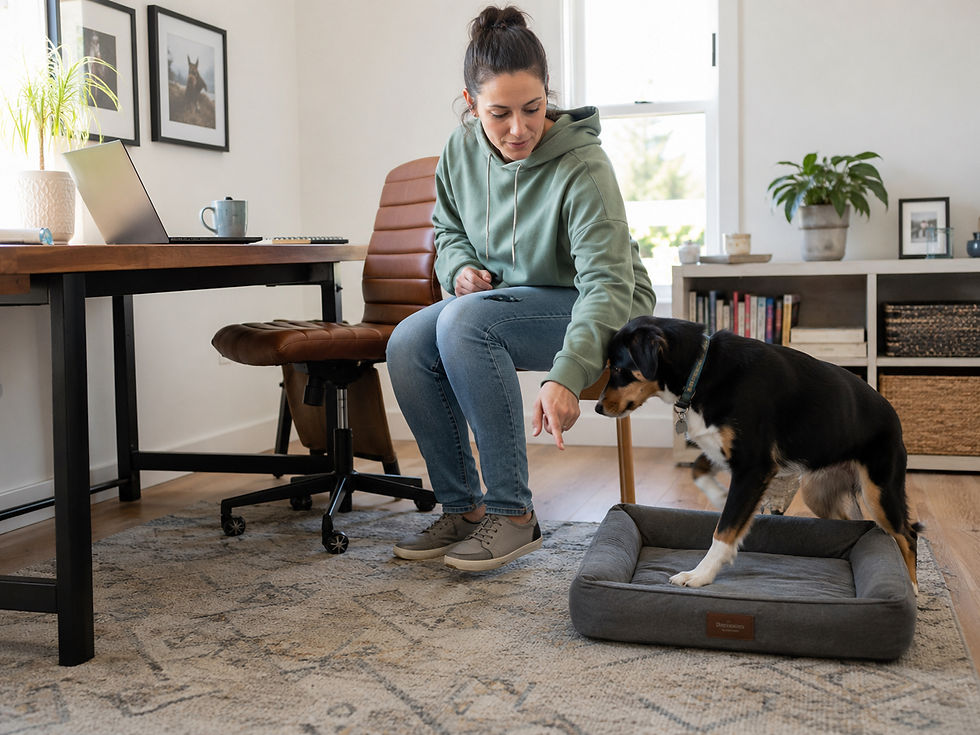
One of the most useful skills for a work-from-home dog is learning how to settle on a specific bed, cot, or mat. This gives your dog a clear job instead of expecting them to figure it out on their own.
A place command teaches your dog:
Where to go
How long to stay there
How to relax around household movement
That calm behavior has value
That they do not need to follow every step you take
Start with short sessions. Guide your dog to the bed, ask for calm behavior, and release them before they become frustrated. Over time, you can increase the duration and practice while you sit at your desk, answer emails, or take short calls.
The place bed should not feel like punishment. It should become a calm, structured area where your dog knows how to switch off.
Do Not Reward Constant Shadowing
Many dogs become “velcro dogs” because following the owner constantly gets reinforced. The dog follows you to the kitchen and gets a snack. They follow you to the office and get talked to. They follow you to the couch and get pet. Eventually, the dog believes they should be involved in every movement you make.
To reduce shadowing, begin creating small moments of separation inside the home. This may include asking your dog to stay on place while you walk across the room, step into the kitchen, or move around the house.
You are not trying to create stress. You are teaching independence in small, manageable steps.
Avoid making every departure and return dramatic. Calm exits and calm re-entries help your dog understand that movement around the house is normal and not something they need to react to.
Give Your Dog Fulfillment Before You Expect Calm
A dog that has had no outlet all morning may struggle to settle during your first meeting. Before asking your dog to relax for a long stretch, make sure their basic needs have been met.
This can include:
A structured walk
A potty break
A short obedience session
Calm leash work
Place command practice
Controlled play
A few minutes of engagement training
The key word is structured. Simply letting your dog run wild in the yard may increase excitement instead of helping them settle. Many dogs need calm, guided activity before they are mentally ready to rest.
Avoid Overusing Toys and Food Distractions
Food puzzles, chews, and enrichment toys can be helpful, but they should not be the only strategy. If your dog only settles when they are chewing, licking, or being entertained, they may not be learning true calmness.
Use enrichment as a tool, not a replacement for training. Your dog should also learn how to lie down and relax without constant entertainment.
This is especially important for dogs that whine, bark, or paw at their owners as soon as the chew is finished. In those cases, the dog has not learned to settle. They have only been temporarily distracted.
Set Boundaries Around Meetings and Focus Time
If your dog interrupts every phone call or video meeting, start preparing before the meeting begins. Do not wait until your dog is already barking, pacing, or demanding attention.
Before a meeting, you can:
Take your dog out to potty
Guide them to their place bed
Put them on leash if needed for structure
Close blinds if window barking is an issue
Remove high-value distractions from the environment
Practice a short calm session before the call starts
Your dog should learn that your desk time means calm time. This takes repetition, but consistency makes a big difference.
If your dog is allowed to interrupt sometimes but corrected other times, they may become more persistent. Clear rules help your dog relax because they know what is expected.
Watch for Overstimulation
Some dogs struggle to settle because the home environment is too busy. If your dog spends the day watching windows, reacting to sounds, following you around, and responding to every movement, they may become mentally exhausted but unable to rest.
Signs of overstimulation may include:
Pacing
Panting when not hot
Restlessness
Barking at small noises
Difficulty lying down
Constant scanning
Whining
Mouthing or attention-seeking
In these cases, your dog may need more structure, less access to stimulating areas, and help learning how to decompress. A calm place bed, quiet room, crate, or limited area can be very helpful when introduced properly.

Do Not Feel Guilty for Asking Your Dog to Rest
Many owners feel bad asking their dog to settle while they work. But rest is healthy. Dogs do not need constant entertainment, constant talking, or constant physical attention.
In fact, dogs that never learn to relax often become more anxious, demanding, and reactive. Teaching calm behavior gives your dog an important life skill.
A well-balanced dog should be able to enjoy activity, training, affection, and play — but also understand how to be calm when nothing is happening.
When Working From Home Reveals Bigger Behavior Issues
Sometimes work-from-home struggles are part of a larger pattern. If your dog cannot be away from you, panics when separated, guards your attention, reacts aggressively to movement, or becomes highly distressed when confined, the issue may require more than a simple routine change.
Behavior concerns such as separation anxiety, reactivity, resource guarding, or severe over-attachment should be addressed with a structured training plan. The earlier these patterns are handled, the easier they are to improve.
Final Thoughts
Helping your dog settle while you work from home is not about pushing your dog away. It is about giving them structure, clarity, and the ability to relax without constant direction.
A calm dog does not happen by accident. It comes from consistent routines, clear boundaries, proper fulfillment, and daily practice. When your dog learns how to settle, your home becomes more peaceful, your workday becomes easier, and your dog becomes more confident and balanced.
At San Diego Dog Training, we help dogs build the structure, calm behavior, and everyday obedience they need to live successfully in the home. Whether your dog struggles with pacing, whining, shadowing, or interrupting your daily routine, the right training can help create a calmer and more manageable lifestyle.


Comments