

Backyard Chaos: Why Good Dogs Lose Their Minds in the Yard

For many dog owners, the backyard feels like the easiest place to let a dog burn off energy. It is familiar, enclosed, and convenient. The dog can run, sniff, bark, play, and move around without the structure of a leash or formal training session.
But for some dogs, the backyard quickly becomes the place where everything falls apart.
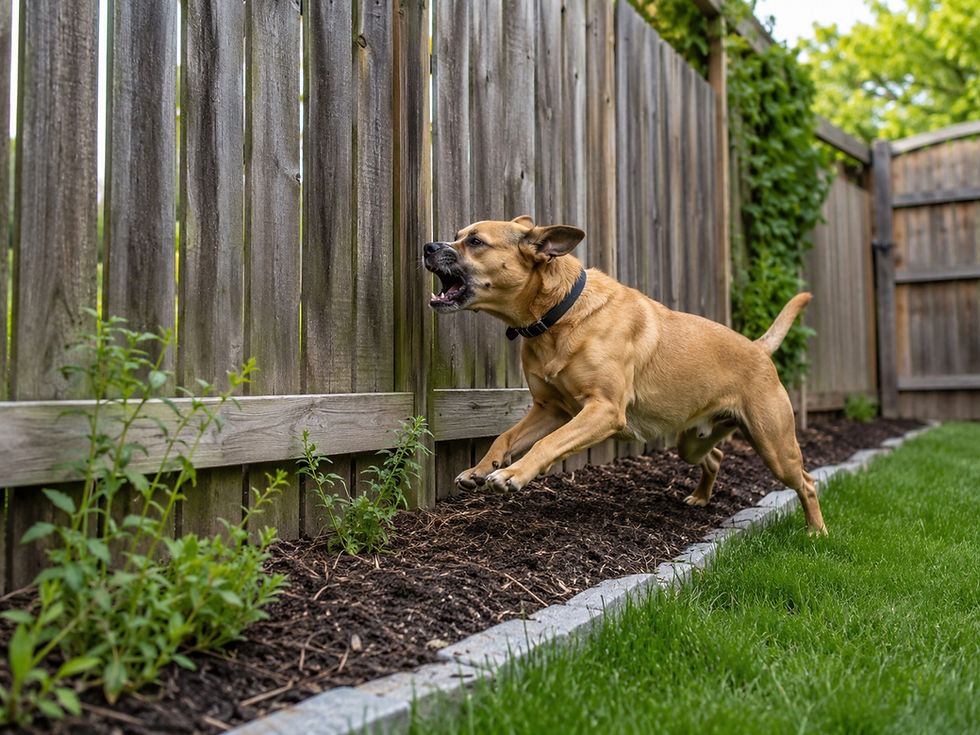
A dog who listens well inside the house may suddenly ignore their owner the second they step outside. A dog who normally seems friendly may rush the fence barking at neighbors, dogs, delivery drivers, or sounds from the alley. A dog who has decent manners indoors may begin zooming, jumping, digging, pacing, or acting like they cannot hear a single command.
This is what many owners experience as backyard chaos.
The confusing part is that the dog is not necessarily being “bad.” In many cases, the yard has simply become an overstimulating, under-structured environment where the dog has practiced excitement for so long that calm behavior no longer feels natural there.
Why the Backyard Triggers So Much Excitement
A backyard may seem ordinary to us, but to a dog, it can be full of stimulation. There are smells, sounds, movement, birds, squirrels, neighbor dogs, people walking by, cars, kids playing, gardeners, trash trucks, and activity beyond the fence.
Even when nothing obvious is happening, the yard can still keep a dog mentally busy. Dogs may patrol the perimeter, scan for movement, listen for sounds, and anticipate something exciting happening.
Over time, many dogs learn that the yard is a place where they are allowed to act on impulse. They bark at the fence. They sprint in circles. They ignore recall. They jump on people. They rush the gate. They become overly physical with other dogs. They rehearse the same excited behavior day after day.
The more a dog practices that pattern, the stronger it becomes.
Fence Barking Is Often Rehearsed Behavior
Fence barking is one of the biggest backyard problems owners struggle with. A dog hears or sees something near the property line and rushes to the fence barking intensely.
Sometimes the trigger leaves, and the dog believes its barking worked.
From the dog’s perspective, the pattern may look like this:
Person walks by → dog barks → person disappears → barking feels successful.
The dog does not understand that the person was already walking past. The dog may think, “I made them leave.”
That feeling can make fence barking extremely reinforcing. The next time the dog hears movement, they are even more ready to charge, bark, and react.
This is why simply yelling the dog’s name from across the yard usually does not work. By the time the dog is already locked onto the fence, their brain is in reaction mode. They are not thinking clearly, and they are not calmly choosing whether to listen.
Zooming Is Not Always Healthy Exercise
Many owners assume backyard zoomies mean the dog is getting good exercise. Sometimes zoomies are harmless bursts of energy, especially in a young dog. But constant frantic running can also be a sign of overstimulation.
A dog who tears through the yard, crashes into furniture, jumps on people, ignores direction, or cannot calm down afterward may not just be “having fun.” They may be practicing a state of emotional chaos.
Exercise should help a dog feel more balanced. But uncontrolled excitement can sometimes make a dog more wired, not less.
This is especially true when the dog goes outside already excited, is released without structure, and then comes back inside even more activated. The yard becomes less of a healthy outlet and more of a place where the dog rehearses impulsive behavior.
Why Dogs Ignore Owners in the Yard
A dog may listen beautifully in the kitchen or living room but act completely different outside. That does not mean the dog is stubborn. It usually means the environment is more distracting than the dog’s training level can handle.
Inside the house, the dog may have fewer competing motivators. Outside, the dog has scent, sound, motion, freedom, and the habit of doing whatever they want.
If the only time the dog hears their name in the yard is when they are already barking, running, or getting into something, the owner’s voice can become background noise. The dog learns that commands outside are optional because nothing has been clearly practiced or reinforced in that environment.
Good indoor behavior does not automatically transfer to the backyard. Dogs need to learn that the same expectations apply outside too.
The Yard Needs Structure, Not Just Freedom
One of the biggest mistakes owners make is treating the backyard as a structure-free zone. The dog goes out, explodes with energy, does whatever they want, and comes back in with no real guidance.
That routine may feel convenient, but it can create problems.
A healthier backyard routine includes calm entry, supervision, direction, and clear expectations. The goal is not to take away the dog’s ability to enjoy the yard. The goal is to teach the dog how to enjoy it without losing control.
This may include:
Waiting calmly before being released outside
Practicing recall before the dog is highly distracted
Interrupting fence patrol before barking escalates
Using leash guidance or a long line when needed
Teaching the dog to check in with the owner
Practicing calm behavior after outdoor activity
Bringing the dog inside before they become overstimulated
Structure helps the dog understand that the yard is still part of training, not a place where all rules disappear.

Do Not Wait Until the Dog Is Already Out of Control
Timing matters.
Many owners try to intervene after the dog is already barking hard at the fence, sprinting out of control, or ignoring every command. At that point, the dog is usually too stimulated to learn well.
It is much easier to guide the dog before they reach that level.
For example, instead of waiting until the dog is charging the fence, watch for the early signs: stiff posture, ears forward, scanning, freezing, pacing the fence line, or suddenly locking onto a sound. That is the moment to redirect, call the dog away, or calmly guide them back toward you.
The goal is to interrupt the build-up before it becomes an explosion.
Practice Recall When Nothing Exciting Is Happening
A common mistake is only calling the dog when something is going wrong. The dog is barking, digging, chasing, or refusing to come inside, and suddenly the owner starts calling their name repeatedly.
Instead, recall should be practiced when the dog is calm enough to succeed.
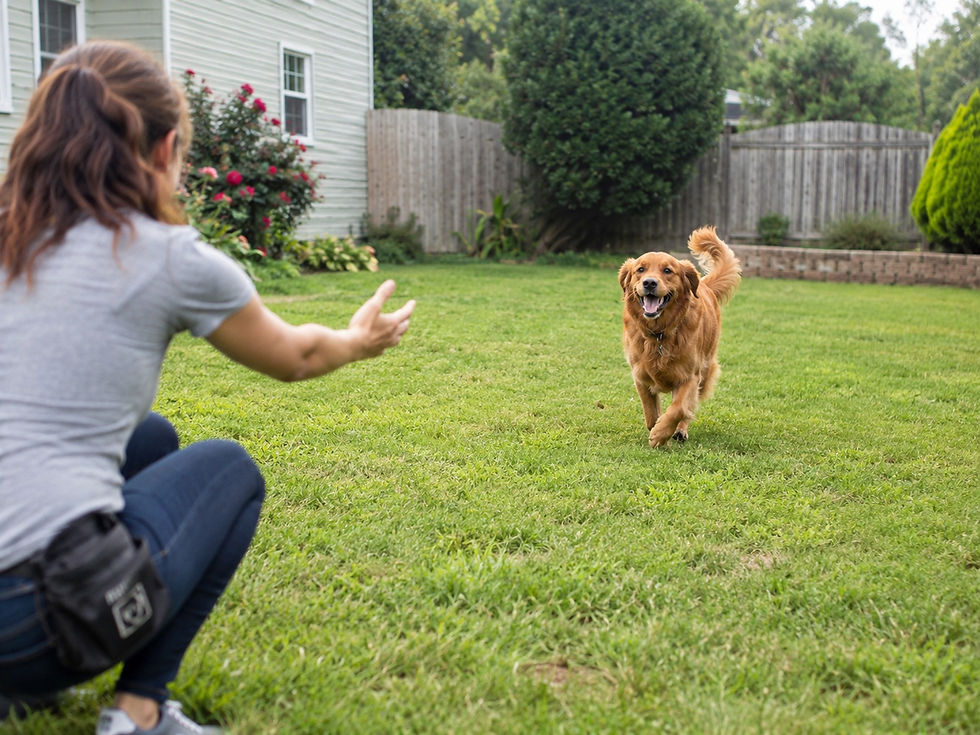
Call the dog from short distances in the yard. Reward them with praise, affection, movement, or a calm release back to sniffing. Practice when there are mild distractions, not only major ones.
A reliable recall is built through repetition. The dog needs to learn that coming back to the owner is valuable, expected, and part of normal backyard life.
Calm Transitions Matter
Backyard chaos does not always end when the dog comes inside. Some dogs bring that excitement back into the house. They rush through the door, jump on furniture, grab toys, bark, pace, or bother other dogs.
This is why transitions matter.
Instead of letting the dog explode outside and then rush back into the home, create a calmer pattern. Have the dog pause at the door. Bring them in with control. Guide them to a place bed, crate, or quiet area if needed. Give their nervous system a chance to come down.
A dog who learns how to shift from outdoor activity to indoor calm will be easier to live with overall.
Backyard Freedom Should Be Earned Gradually
Some dogs are not ready for full freedom in the yard. That does not mean they can never have it. It means they need training, repetition, and better habits first.
For dogs who fence bark, ignore recall, rush gates, or become overly excited, using a leash or long line in the backyard can be very helpful. It gives the owner a way to guide the dog instead of chasing, yelling, or hoping the dog chooses to listen.
As the dog improves, freedom can be increased gradually. The more the dog proves they can respond, settle, and check in, the more freedom they can safely earn.
The Backyard Can Become a Training Space
The backyard does not have to be the place where your dog loses their mind. With the right structure, it can become one of the best places to practice real-life training.
You can use the yard to work on recall, leash manners, impulse control, door manners, place command, calm observation, and disengaging from distractions. Because the environment is familiar but still stimulating, it can be a great bridge between indoor training and public outings.
The key is consistency.
Your dog should not have one set of rules inside and a completely different set of rules outside. Calm behavior, listening, boundaries, and engagement should matter in both places.
Final Thoughts
Backyard chaos is common, but it is not something owners have to accept as normal.
Barking at the fence, ignoring commands, zooming uncontrollably, and becoming overstimulated outside are all signs that the dog needs more structure and guidance in that space.
A good dog can still struggle in the yard because the environment has become too exciting and too unstructured. With better timing, calmer routines, consistent recall practice, and clearer expectations, the backyard can become a place where your dog enjoys freedom without losing control.
At San Diego Dog Training, we help dogs build the calm, reliable behavior they need in real-life environments — not just inside the house, but in the yard, on walks, around distractions, and in everyday family life.


Comments