

Apartment and Condo Dog Training Tips for San Diego Owners

Living in an apartment or condo with a dog can be convenient, especially in a busy city like San Diego. Many owners enjoy being close to beaches, parks, restaurants, and walkable neighborhoods. But apartment and condo living also creates unique challenges for dogs.
Shared walls, elevators, narrow hallways, stairwells, neighbors, delivery drivers, parking garages, and limited outdoor space can all make daily life more stressful for a dog that struggles with impulse control, reactivity, barking, or overstimulation.
The good news is that dogs can learn how to live calmly in smaller, busier environments. The key is not just giving your dog more exercise. It is teaching structure, boundaries, emotional control, and calm behavior around everyday apartment distractions.

Why Apartment and Condo Living Can Be Hard for Dogs
Dogs are naturally aware of sounds, movement, smells, and changes in their environment. In an apartment or condo, those triggers are often happening all day.
Your dog may hear:
Footsteps above or outside the door
Neighbors talking in the hallway
Elevator doors opening and closing
Other dogs barking nearby
Delivery drivers dropping off packages
Cars, bikes, and pedestrians outside
For some dogs, this constant stimulation creates anxiety, barking, pacing, door rushing, leash pulling, or reactivity. They may not understand that hallway sounds or elevator movement are normal parts of the environment. Instead, they begin to treat every sound as something to alert, investigate, or control.
This is especially common in San Diego apartments and condos where many buildings are pet-friendly, high-density, and located near busy streets, beaches, or downtown areas.
Teach Calm at the Front Door
One of the biggest problem areas for apartment and condo dogs is the front door.
Because the front door is close to shared hallways, elevators, neighbors, and passing dogs, many dogs become highly alert around it.
A dog that constantly rushes the door, barks at hallway sounds, or waits by the entrance can quickly develop stronger territorial behavior.
Instead of allowing your dog to patrol the door, create structure around that area.
Teach your dog that the front door is not their job. You can practice having them go to a place bed, crate, or designated calm area when they hear hallway noise or when someone knocks. This gives the dog a clear alternative behavior instead of barking, charging, or fixating.
The goal is not to punish awareness. The goal is to teach your dog how to respond calmly instead of escalating every time something happens outside.
Practice Hallway Manners
Apartment and condo hallways can be difficult because they are narrow and unpredictable. You may turn a corner and suddenly see another dog, a neighbor, a child, a maintenance worker, or a delivery person.
For dogs that are reactive, fearful, overly social, or frustrated, hallways can quickly become a problem.
Good hallway manners start before you even leave the unit. Your dog should not explode through the door, drag you down the hallway, or pull toward every person or dog they see.
Practice calm exits by asking your dog to wait before leaving the apartment. Once outside, keep the walk structured. Your dog should move with you instead of scanning, pulling, or leading the entire experience.
In tight spaces, your dog does not need to greet everyone. In fact, many apartment dogs become more reactive because they are allowed to build excitement or tension during repeated hallway greetings. Neutrality is much more valuable.
A calm apartment dog should be able to pass people and dogs without needing to bark, lunge, pull, or interact.
Help Your Dog Handle Elevators
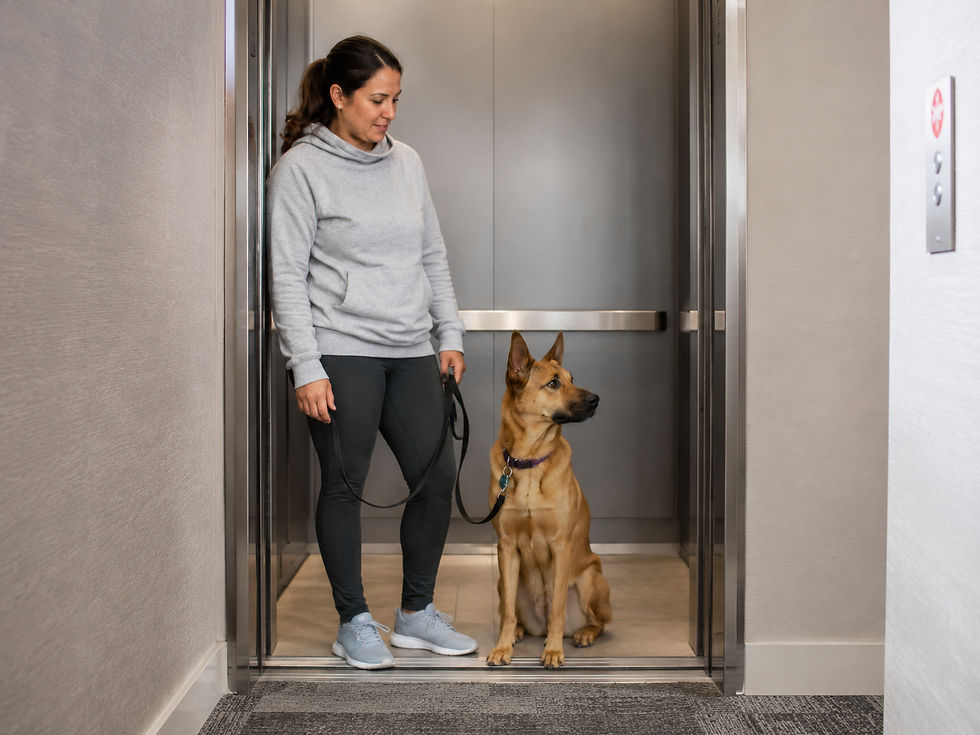
Elevators are a major challenge for many condo and apartment dogs. They are small, enclosed spaces with sudden movement, strange sounds, opening doors, and unexpected people or dogs entering.
Some dogs become nervous in elevators. Others become overly excited or reactive because they feel trapped and overstimulated.
Start by teaching your dog to enter and exit the elevator calmly. Do not let your dog rush inside or bolt out when the doors open. Keep them close to you, create space when possible, and ask for calm behavior before moving.
If another dog is already inside the elevator, it is okay to wait for the next one. This is not avoidance. It is smart handling. Tight elevator greetings can easily create tension, especially when both dogs are on leash and have no room to move naturally.
Your dog should learn that elevators are not social spaces. They are transition spaces. The expectation should be calm, close, and neutral.

Manage Barking Through Shared Walls
Barking can quickly become a serious issue in apartments and condos because neighbors are so close. Even if your dog is not barking constantly, repeated barking at noises, people, dogs, or outdoor movement can become stressful for everyone.
The mistake many owners make is only trying to stop the bark after the dog is already fully activated. By that point, the dog is usually too aroused to make a good decision.
Instead, look for the early signs:
Ears perked toward the door
Staring at the wall or window
Pacing toward the entrance
Low growling or huffing
Body stiffening
Sudden alert posture
These are moments where you can interrupt the pattern before barking escalates.
Guide your dog away from the trigger and into a structured behavior, such as place, down, or calm rest. Over time, your dog learns that noises outside do not require a reaction.
This is especially important for San Diego owners living in buildings with frequent foot traffic, shared courtyards, or outdoor walkways.
Create a Calm Indoor Routine
Many apartment dogs struggle because they do not know how to turn off inside the home. Owners often assume that because the dog lives in a smaller space, the dog will naturally relax. But smaller spaces can actually make it harder for a dog to disengage from sounds and movement.
A calm indoor routine helps your dog understand what to do when nothing exciting is happening.
This can include:
Structured place time
Crate time
Calm leash handling indoors when needed
Clear rules around windows and doors
Limited access to overstimulating areas
Quiet decompression after walks
The goal is to teach your dog that the apartment or condo is not a place to pace, patrol, bark, and react. It is a place to settle.
Dogs that learn how to rest indoors are usually easier to manage outside because their nervous system is not constantly operating at a high level.
Be Careful With Balcony and Window Access
Many San Diego apartments and condos have balconies, patios, large windows, or sliding doors. While these can be great for light and fresh air, they can also become a major source of overstimulation.
A dog that spends long periods watching people, dogs, cars, bikes, or delivery drivers may appear entertained, but they may actually be practicing fixation.
Over time, that fixation can turn into barking, whining, lunging at the glass, or reacting more strongly on walks.
If your dog struggles with reactivity or barking, limit unsupervised access to windows and balconies. Use structure instead of allowing your dog to rehearse the same behavior every day.
Your dog does not need to monitor the neighborhood. They need to learn how to be neutral in it.
Teach Neutrality Around Other Dogs
Apartment and condo communities often have many dogs living close together. You may see the same dogs in hallways, elevators, parking areas, courtyards, and sidewalks.
This can be difficult for dogs that are overly social, frustrated, nervous, or reactive.
One of the best things you can teach your dog is neutrality. Neutrality means your dog can notice another dog without needing to pull toward it, bark at it, hide from it, or become overly excited.
Not every dog needs to meet. In fact, frequent on-leash greetings in tight apartment spaces can create more problems than they solve.
Instead, focus on calm passing, leash manners, and engagement with the handler. Your dog should learn that seeing another dog does not automatically mean interaction.
Use Walks for Structure, Not Just Exercise
San Diego is a great city for walking dogs, but walks can become chaotic if they are only used for physical exercise. In apartment and condo settings, the walk often starts with excitement before the dog even gets outside.
The elevator, hallway, lobby, sidewalk, and nearby dogs can all build arousal before the walk begins.
A structured walk helps your dog stay mentally connected to you. This means your dog is not pulling, scanning, reacting, or making all the decisions. The walk becomes a training opportunity, not just an energy outlet.
Exercise matters, but exercise without structure can sometimes create a dog with more stamina and the same behavior problems.
When Apartment Dog Problems Need Professional Help
Some apartment and condo behavior issues can improve with consistency and daily structure. Others need professional help, especially if the dog is showing aggression, intense leash reactivity, severe barking, anxiety, or inability to settle.
If your dog is struggling in elevators, hallways, shared spaces, or around neighbors, it is better to address the issue early. These behaviors often become stronger with repetition.
At San Diego Dog Training, we help dogs build calm behavior, better leash manners, impulse control, and emotional regulation in real-life environments. Apartment and condo dogs need more than obedience commands. They need to learn how to stay calm around the daily triggers that come with close-neighbor living.
Final Thoughts
Apartment and condo living can be challenging for dogs, but it can also be a great environment when the right structure is in place. Your dog does not need to bark at every hallway sound, rush every doorway, panic in elevators, or react to every neighbor and dog nearby.
With consistent training, clear boundaries, and calm handling, your dog can learn how to live peacefully in a busy San Diego apartment or condo community.
The goal is not to keep your dog away from every trigger. The goal is to teach your dog how to move through those triggers with confidence, control, and calm behavior.


Comments